US teen astonishes researchers after charting 1.5 million undiscovered cosmic objects
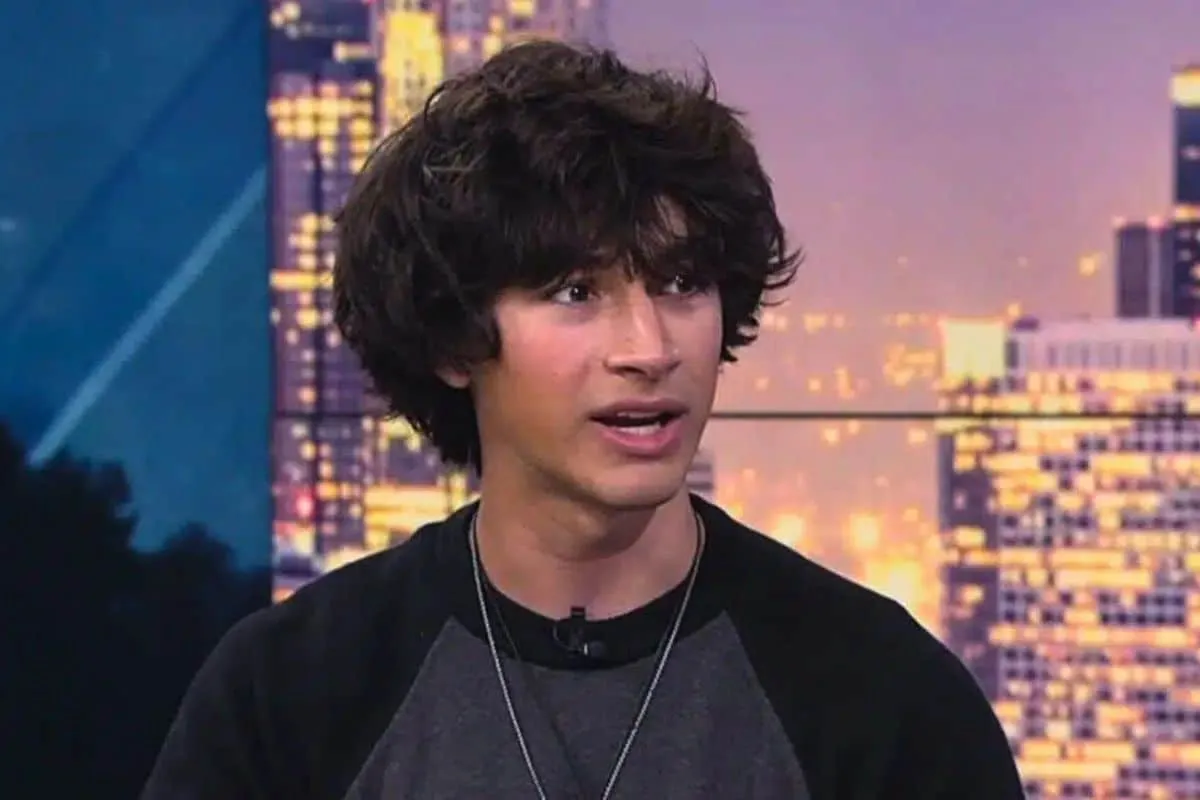
In a remarkable step for modern astronomy, a California high school student has identified more than 1.5 million previously unknown space objects. Using artificial intelligence to trawl through dormant NASA mission data, Matteo Paz, a teenager from Pasadena, California, turned a simple summer project into a major contribution to science.
How a summer side project turned into a big discovery
Matteo Paz began this journey while taking part in the Planet Finder Academy in the summer of 2022. The programme, which gets students working on real astronomy problems, sparked his dive into astronomical data analysis. Mentored by Caltech scientist Davy Kirkpatrick at the Infrared Processing and Analysis Center (IPAC), Matteo expanded a summer side project into a peer-reviewed paper published in The Astronomical Journal. “The model started showing promise almost right away,” Kirkpatrick told Phys.org, underlining how quickly the work progressed.
His breakthrough came from a long-forgotten archive from the retired NASA mission NEOWISE, launched in 2009. NEOWISE was built to spot near-Earth asteroids and gathered around a decade of full-sky infrared observations, leaving nearly 200 billion rows of data to sift through. What would have taken years of manual work was made far quicker by Matteo’s use of AI.
Using AI and advanced methods
At the heart of the discovery was an automated algorithm and a machine-learning pipeline Matteo put together in just six weeks. Drawing on his background in theoretical mathematics, coding and time-series analysis, he used Fourier transforms and wavelet analysis to search the data. That approach picked out faint, variable light sources that people and standard software had missed.
His model flagged flickering, pulsing and fading objects by picking up tiny variations in the infrared spectrum, and those detections could have uses beyond astronomy (for instance, in other fields that work with time-based signals). Matteo proposed this bold, automated route after an initial plan for manual study, reshaping the research approach. His ability to handle what are normally “graduate-level skills” — honed at Pasadena’s elite Math Academy for mathematically gifted students — stands out. As he refined the model, the findings grew steadily more exciting, showing what AI can do in astronomical research.
What this leads to next
Matteo’s work produced a detailed catalogue of variable light sources that will be released to the scientific community in 2025. That publicly available catalogue is already guiding new observations at major facilities, including the Vera Rubin Observatory and the James Webb Space Telescope (JWST). With targets such as quasars, binary stars and supernovae highlighted, the catalogue should deepen our understanding of stellar evolution, distant galaxies and high-energy processes across the universe.
Matteo also sees his system being used outside astronomy — in areas like finance, environmental monitoring and neuroscience — because it can analyse any kind of time-based data. Tools developed to spot signals in space might therefore help untangle complex systems here on Earth.
Alongside the scientific recognition, Matteo now works as a paid research assistant at Caltech’s IPAC and mentors new students in the Planet Finder Academy. “If I see their potential, I want to make sure they reach it,” says Davy Kirkpatrick, reflecting his ongoing support for young researchers.
Matteo Paz’s story shows the power of curiosity, creativity and code. His discovery does more than add new entries to a catalogue — it lights the way for the next generation of explorers. As the universe keeps revealing its secrets, people like Matteo remind us to keep looking up and thinking big.