Chance discovery of a 16th-century shipwreck over 2,500 metres deep reshapes the crucial history of the Mediterranean
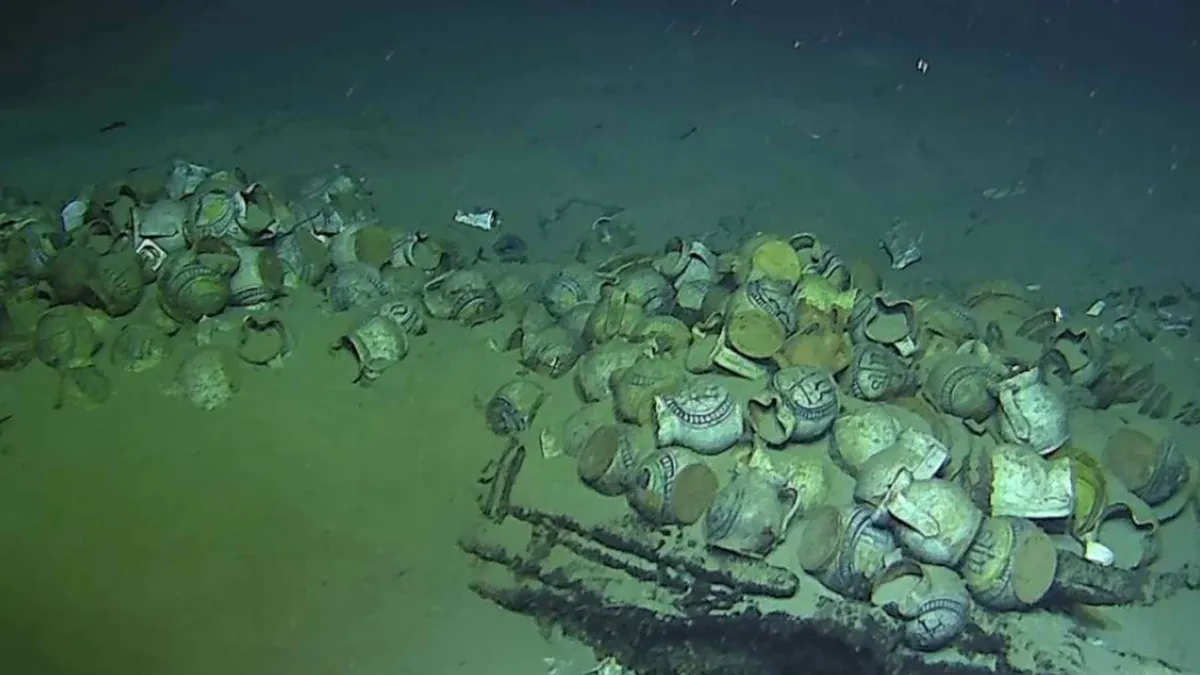
In a find that could change what historians think about Mediterranean trade in the Renaissance, researchers have located the wreck of the “Camarat 4,” a remarkably well-preserved merchant ship from the 1500s. Resting more than 2,500 metres below the sea surface, this site has yielded a wealth of artefacts that may reshape how we view 16th-century commerce in the Mediterranean. The wreck was uncovered by the French Navy and examined by France’s Department of Underwater and Submarine Archaeological Research (DRASSM), and it is the deepest shipwreck ever documented in French waters.
A striking find off Saint-Tropez
The “Camarat 4” was spotted in early March 2025 near Ramatuelle, off France’s southern coast, during a routine seabed survey linked to the French Navy’s deep-sea training. Using advanced kit such as multibeam sonar, teams found the ship in an almost intact state. Marine Sadania, a well-known underwater archaeologist, described it as “a kind of time capsule preserved far from storms and looters on the surface.”
The wreck lies in the Gulf of Saint-Tropez, an area regularly used by merchant ships in the Renaissance. Given the great depth, divers can’t reach the site, so researchers carried out visual inspections with remotely operated vehicles (ROVs) equipped with high-definition cameras to study the wreck from a safe distance.
What the preserved artefacts tell us
The cargo gives a vivid picture of the ship’s trade. Nearly 200 decorated ceramic jugs were found, with floral and geometric patterns; some bear the Christian monogram IHS, suggesting possible religious significance. There are also stacks of yellow-glazed plates, which together point to the types of goods the vessel carried. The discovery of six cannons and a large anchor indicates the ship was well armed and built for long voyages.
Bundles of metal bars appear to have been used both as ballast and as cargo. As Sarah Kuta notes in Smithsonian Magazine, these finds suggest the ship was loaded with finished goods from Italian workshops — specifically those in Liguria (a region in north-west Italy) — and likely bound for markets in France or Spain. The careful construction and preservation of these items add to the wreck’s historical value.
How tech and archaeology came together
The study of “Camarat 4” highlights how modern methods have changed underwater archaeology. The DRASSM team plans to build a 3D digital twin of the wreck by stitching together thousands of overlapping images, so scholars and the public can explore the site virtually without disturbing it. This approach opens up new ways for students and researchers to study wrecks that were once accessible only to expert divers.
The team is also taking an ethical stance: they aim to disturb the site as little as possible, removing only a small number of artefacts for laboratory analysis. That cautious approach recognises both the high cost and the risks of a full excavation at such depths.
Balancing preservation and modern challenges
Alongside the ancient cargo, researchers found modern debris — plastic bottles, beer cans and fishing nets — which underlines the long-term human footprint on the oceans.
Overall, the discovery of the “Camarat 4” sits at the crossroads of history and technology. It promises to deepen our understanding of the past while also drawing attention to present-day environmental issues. The French Navy, DRASSM and partners such as the Mediterranean Maritime Prefecture and France’s Ministry of Culture will work together to preserve and celebrate this unique piece of maritime heritage for generations to come, inviting society to reflect on the layers of history lying beneath the waves.